
| Band Width × Thickness(mm) | Series Diameter Range(mm) | Mounting Stud |
| 10.0 × 1.0 | 20.6–50.0 | M5 / M6 |
| 14.0 × 1.0 | 20.6–50.0 | M5 / M6 |
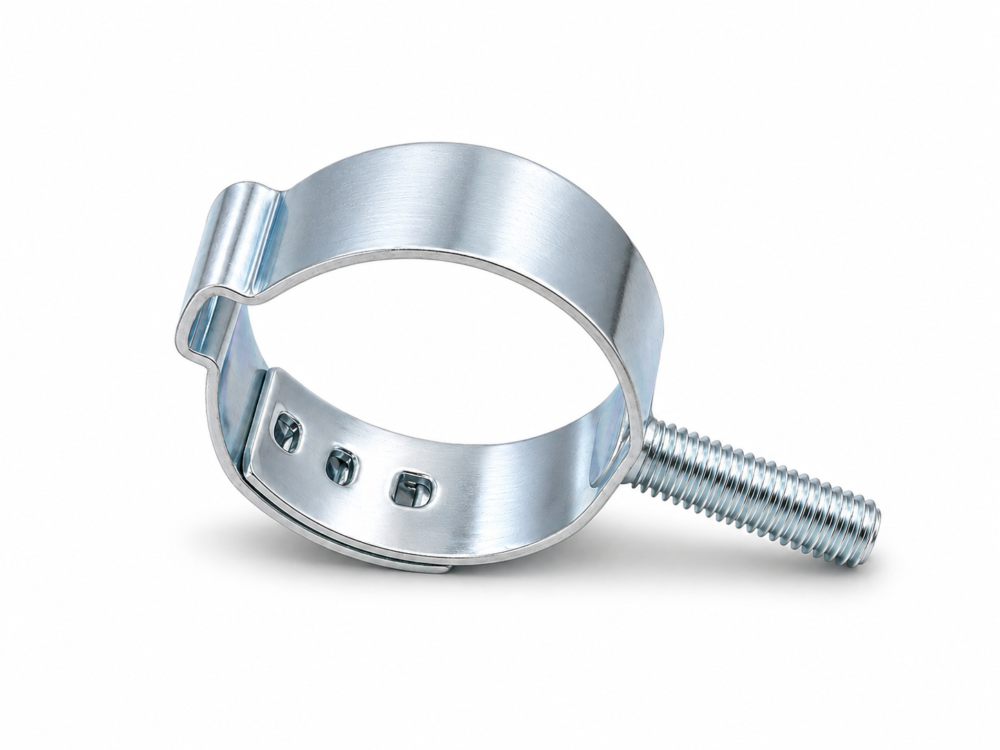
The table summarizes the series. Verify the compatible component outside diameter by Towin part number. Confirm thread pitch, usable thread length, and tolerances on the approved drawing.
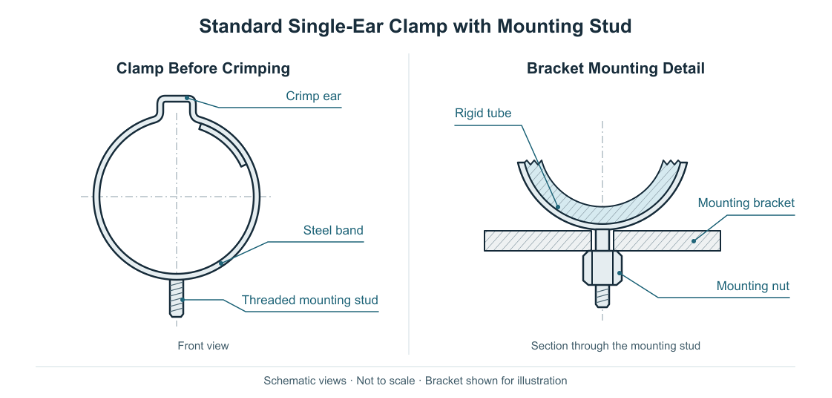
Sizing and positioning. Select the clamp using the component outside diameter and tolerance at the clamping zone. Check the bracket hole diameter, location and thickness. Verify adequate nut thread engagement and clearance for the pincer jaws and the nut-tightening tool.
Ear crimping. Position the clamp in the specified clamping zone and orient the stud to align with the bracket hole. Center the matched pincer jaws on the ear and complete the crimp in one stroke at the validated closing force. Check the crimped ear profile and clamp position against the acceptance criteria.
Bracket fastening. Insert the stud through the bracket hole and tighten the nut to the approved fastener specification. Inspect for clamp rotation, axial movement and damage, then verify assembly retention as required for the application.
Ear closing force (N) is the force the pincers apply during crimping. Mounting nut tightening torque (N·m) is the torque applied to the nut during fastening. Validate the force for the clamp size, component and jaw combination. Validate the torque for the stud, nut and bracket combination.
During trial assembly, verify performance at the relevant component tolerance limits. Follow the approved procedure for assemblies outside the acceptance limits. For safety-related components, validate the assembly and obtain approval under the project requirements.
For a quote, provide the component OD and tolerance, band width and thickness, thread specification and usable length, bracket hole location and thickness, and quantity. For new applications, include an assembly drawing or sample to confirm ear orientation, tool access and installation clearance.